Technology in Bars: Digital Solutions for Better Service
Bars are adopting digital tools at a rapid pace to improve service quality, reduce costs, and create memorable customer experiences. The integration of smart pouring systems, digital menus, AI-driven personalization, and advanced audiovisual systems reshapes how bars operate and how guests interact with venues. This article outlines the most impactful technologies for 2025, practical ways to implement them, and guidance on prioritizing investments while safeguarding customer data and privacy.
Technologies that are transforming bars
Several converging technologies are redefining the bar environment: automated pouring hardware, digital ordering and payment platforms, interactive signage, self-serve tap walls, AI analytics, and energy-efficient systems. Together these solutions improve speed of service, consistency of product quality, and yield better margins by minimizing waste and optimizing staffing.
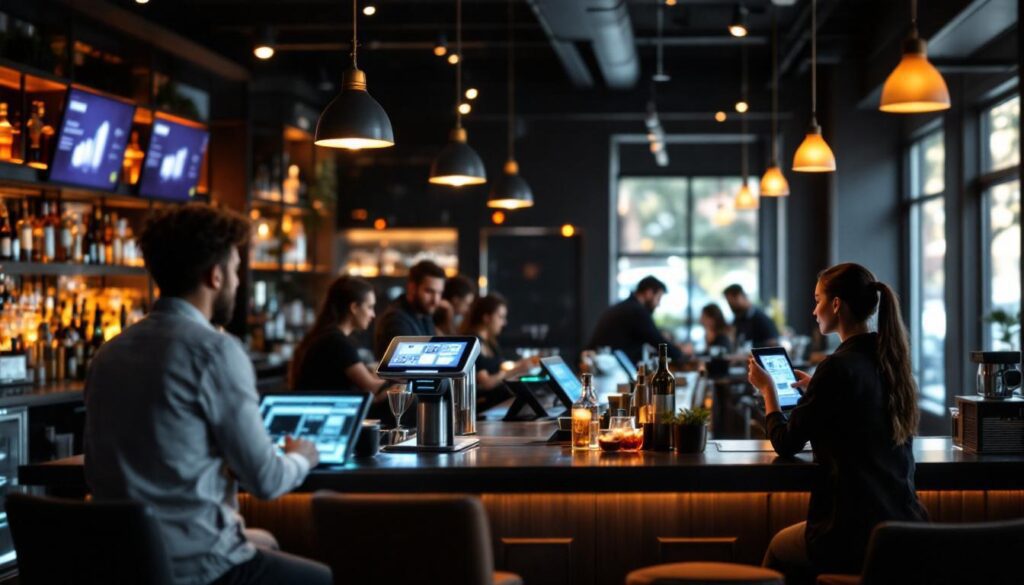
Beyond operational gains, technology also unlocks new revenue streams—dynamic merchandising through digital signage, personalized promotions driven by customer data, and premium experiences enabled by immersive audio-visual systems. Bars that combine these elements thoughtfully can create distinct atmospheres that attract repeat visits and encourage higher spend per visit.
Another significant advancement is the integration of mobile apps that allow patrons to browse menus, place orders, and pay directly from their smartphones. This not only reduces wait times but also enhances the customer experience by offering tailored recommendations based on previous orders and preferences. Additionally, bars are leveraging AI-driven analytics tools to gain deeper insights into customer behavior, helping management make informed decisions on inventory, staffing, and layout optimization.
Energy-efficient technologies are also making a notable impact, as bars invest in smart lighting, refrigeration, and temperature control systems to reduce operational costs and their environmental footprint. These sustainable practices resonate well with eco-conscious consumers and can become a key differentiator in a competitive marketplace. Furthermore, virtual reality and augmented reality experiences are beginning to emerge, offering patrons immersive entertainment options that extend beyond traditional bar interactions.
Digital menus and QR codes
Digital menus and QR codes remain a foundational upgrade because they are low-cost to deploy and immediately improve the guest experience. A simple QR scan can present an always-updated menu, show allergen and pricing information, and promote limited-time cocktails—reducing printing costs and speeding menu updates.
Best practice is to design mobile-first menus that load quickly, include clear imagery and detailed descriptions, and integrate with ordering systems so customers can move seamlessly from browsing to purchase. Accessibility is important: ensure text is readable on small screens and that menus are navigable for users with assistive technologies.
Online orders and payments, and contactless payments
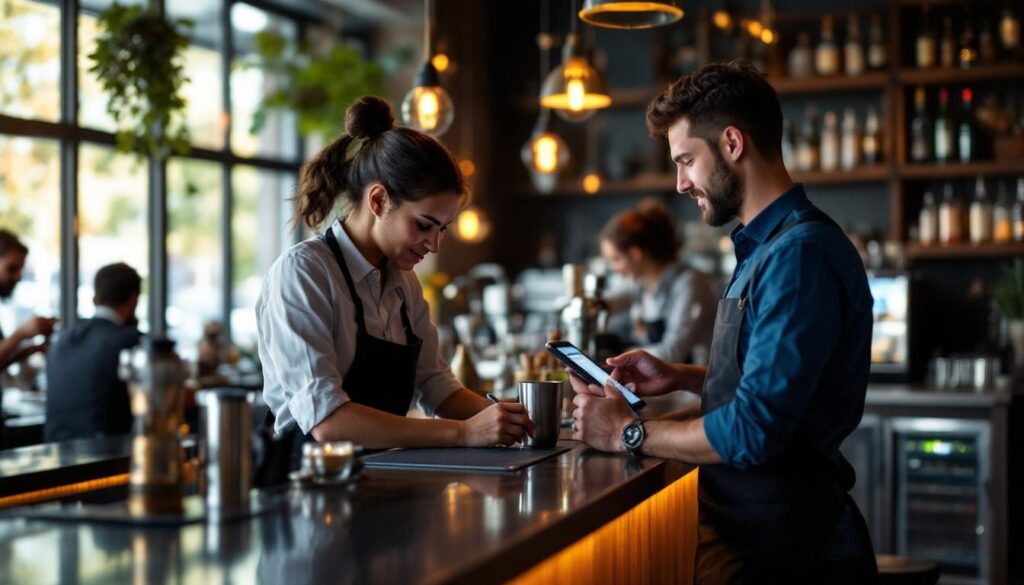
Contactless ordering and payment platforms let patrons order from their phones or tableside tablets, shortening queues and increasing table turnover. These systems also reduce friction for staff during peak hours and enable easy add-ons and upsells through prompted item suggestions.
Adopting reputable providers that support secure card-on-file and tokenized payments minimizes friction while protecting cardholder data. Integrations with the wider point-of-sale (POS) ecosystem ensure sales data flows directly into back-office reporting for real-time financial visibility.
Digital loyalty programs
Digitally managed loyalty programs convert casual visitors into regulars by rewarding frequency and spend. Modern systems use mobile apps or integrated QR-based check-ins that automatically track points, unlock offers, and deliver personalized incentives based on patron behavior.
Programs that include tiered rewards, birthday offers, and event invites tied to customer preferences tend to see higher engagement. Loyalty platforms also produce first-party data—critical for tailoring future promotions without overreliance on third-party advertising.
Artificial intelligence and demand prediction
AI is moving from experimental to practical in bar operations. Machine learning models can forecast demand by daypart, predict which cocktails will be popular based on weather or events, and suggest inventory levels to reduce both stockouts and overstocks.
Using AI for demand prediction improves ordering accuracy and cuts waste, while personalization engines analyze past visits to recommend drinks or promotions that increase conversion. When implemented responsibly, these tools increase customer satisfaction and improve margins through smarter purchasing and targeted offers. Examples of AI-driven signage and predictive tools are appearing in hospitality use cases and digital signage solutions in 2025.
Digital solutions for efficient bar management
Efficient management depends on consolidating data streams—sales, inventory, labor, and reservations—into actionable dashboards. Cloud-based management solutions give managers real-time visibility across these areas and enable rapid decision-making from smartphones or tablets.
Centralized systems reduce manual reconciliation and enable faster responses to shortages or surges in demand. Good solutions include configurable alerts for low stock, automated reorder triggers, and labor scheduling tied to forecasted footfall, which helps control labor costs without sacrificing service quality.
Integrated POS and management systems
An integrated POS is the backbone of modern bar technology. When POS systems communicate with inventory, reservations, loyalty, and accounting software, data silos disappear and reporting becomes reliable. This integration supports dynamic pricing strategies, happy-hour adjustments, and bundle offers without manual overrides.
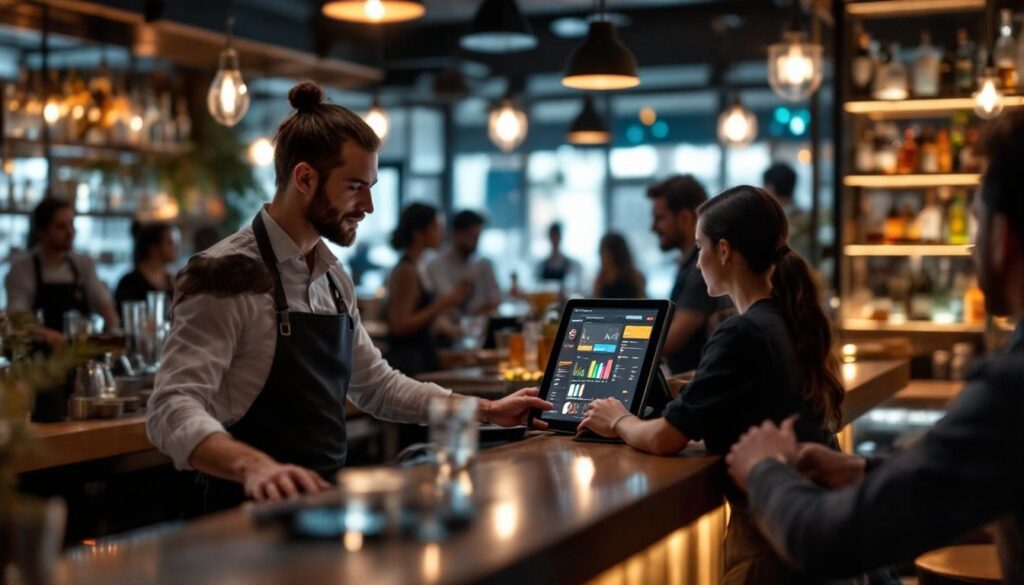
Select POS vendors that prioritize open APIs and have proven hospitality integrations. Integration reduces errors, streamlines end-of-day reconciliation, and enables a consistent guest experience across service channels—bar, table, and online ordering.
Digitalized inventory management
Inventory management has progressed from paper counts to digital systems that track bottles, kegs, and pour-through analytics. Smart pouring systems and connected scales provide granular data on pour volumes and losses, enabling accurate cost-of-goods-sold (COGS) calculations and tighter margin controls.
For example, automated pour-tracking devices reduce overpouring and freebies, which in turn reduces stock loss due to human error. When paired with a cloud inventory system, these devices help forecast purchases and detect discrepancies quickly, saving money and time during monthly audits. See automated pour-tracking solutions for detailed examples of implementation benefits.
Reservation and table management platforms
Reservation systems and table management platforms do more than prevent overbooking. They provide accurate forecasting of arrival patterns, enable allocation of tables by party type, and help coordinate staff during busy periods. Real-time updates reduce no-shows by sending confirmations and reminders via SMS or app notifications.
Platforms that tie reservations to customer profiles allow pre-ordering of rounds or special menus, which speeds service and increases average ticket sizes. Additionally, integrating reservations with loyalty data creates opportunities to personalize the arrival experience—favorite drinks on the table, preferred seating, or special offers.
Self-service kiosks and service robots
Self-serve tap walls and kiosks let guests pour their own beer or wine and are particularly effective for tasting flights and events. These installations reduce wait times and support customized pours—patrons pay by ounce and pour what they want, increasing perceived control and often spend.
Service robots and automated delivery units are being explored in larger venues and event spaces to handle repetitive tasks like drink delivery or bussing. While not a universal fit, these technologies can be deployed in specific contexts—late-night shifts, high-volume festival events, or venues with consistent traffic patterns—to free staff for higher-value interactions.
How to improve operational efficiency with technology
Operational efficiency improves when technology replaces manual, error-prone processes and surfaces clear metrics. Start by mapping current workflows—ordering, prep, service, and closeout—then identify bottlenecks where automation or digital tools can reduce time or error.
Small pilots are recommended: implement one technology in a controlled area (for example, a single digital menu or a smart tap) and measure outcomes—transaction speed, order accuracy, waste reduction, and guest satisfaction—before scaling. Continuous monitoring keeps investments aligned with actual performance gains.
Process optimization and staff training
New technology demands updated processes and corresponding staff training. Clear standard operating procedures (SOPs) help staff understand how tools change responsibilities—what to automate, what requires human oversight, and how to escalate technical issues.
Training should be practical and scenario-based: how to troubleshoot a failed kiosk, how to reconcile pour data with POS reports, and how to use guest data to provide personalized service while respecting privacy. Cross-training increases flexibility so employees can adapt to fluctuating demand without service breakdowns.
Using data for tactical decisions
Data should inform day-to-day and strategic choices. Tactical decisions driven by data include changing a cocktail recipe based on ingredient shortages, reallocating staff for a game night, or promoting underperforming products through targeted discounts. Real-time dashboards that display sales by SKU, time of day, and staff performance empower managers to act quickly.
Segmenting customer behavior—frequent vs. occasional visitors, preference for craft beer vs. cocktails—enables tactical marketing like limited-time offers or event invitations that resonate. The most useful analytics are simple, visual, and tied to clear KPIs such as average spend, table turnover, and margin per drink.
Reduce waste and control costs
Waste reduction is a direct benefit of digital adoption. Automated pouring, precise inventory tracking, and AI forecasting combine to reduce over-ordering and spoilage. Bars that implement pour-control systems report measurable decreases in loss due to overpouring and unauthorized freebies.
Energy-efficient equipment and sustainable practices—LED lighting, smart thermostats, and responsible disposal systems—also cut operational costs. Investing in sustainability often yields medium-term savings and aligns the brand with customer preferences for eco-conscious venues.
Mejor experiencia del cliente y aumento de ingresos
Technology enhances guest experience both tangibly and intangibly. Faster service, consistent drink quality, personalized offers, and immersive environments all contribute to a perception of higher value. Digital menus, contactless ordering, and tailored loyalty rewards increase convenience and satisfaction, which in turn drives repeat business.
Revenue uplifts come from higher table turnover, targeted upsells, and reduced leakage from waste. Personalized recommendations and AI-driven promotions can increase average check size, while interactive signage and AV systems encourage guests to try premium offerings or attend ticketed events.
Good practices for prioritizing investments
Prioritization should be based on ROI, ease of integration, and customer impact. Start with upgrades that solve the most painful problems—slow service, high waste, or inconsistent product quality—and that integrate cleanly with existing systems. Pilot, measure, and iterate before large-scale rollouts.

Consider vendor stability, open APIs, and support for local regulations when choosing providers. Favor modular solutions that can scale and be replaced without a complete systems overhaul. Engage staff early in the selection process to ensure practical adoption and to surface potential operational friction points.
Security and privacy considerations
With increasing dependence on digital systems comes heightened responsibility for protecting customer data. Payment processing must use tokenization and PCI-compliant providers. Customer information collected for loyalty and personalization should be stored securely and used transparently, with opt-in consent and clear privacy policies.
Operational security practices include strong access controls, regular software updates, and vendor risk assessments. Logging and monitoring of system activity help detect anomalies early. Public-facing systems—Wi-Fi, kiosks, and tablets—should be isolated from internal networks to reduce attack surface. When in doubt, consult with a data security specialist to align practices with local regulations and industry standards.
Technology in bars is not a one-size-fits-all solution. The most successful implementations focus on guest experience improvements that also deliver measurable operational or financial benefits. From smart pouring systems that protect margins to AI that forecasts demand, digital tools can make bars more efficient, sustainable, and engaging. Thoughtful piloting, staff training, and a commitment to security will ensure that digital transformation translates into better service and stronger business results.
Further reading and resources: see automated pour-tracking coverage from Pourify for implementation insights, examples of battery-powered digital kiosks from Palmer Digital Group, emerging bar innovations covered by San Diego Beer News, and industry tech trends discussed by Bar & Restaurant. These sources provide practical case studies and vendor examples to explore next steps for technology adoption:
Unlock the Future of Your Bar with Data-Driven Innovation
At Rockstar Data, we specialize in empowering bars to elevate their operations through advanced data analytics and AI-driven insights. Discover how our tailored solutions can optimize your service, enhance customer experiences, and maximize profitability in an increasingly digital marketplace. Explore Our Solutions and take your bar to the next level today.