Complete Guide to Efficient Bar and Restaurant Management
Efficient bar and restaurant management combines technology, disciplined processes and people-first leadership: choose a POS that integrates with inventory and scheduling, streamline kitchen and service workflows, track inventory in real time and manage staff with clear expectations, KPIs and regular feedback. Done well, it reduces waste, speeds service, improves guest experience and protects margins.
How to improve operational efficiency in bars and restaurants
Adopt a modern POS tailored to the operation
Choosing the right point-of-sale (POS) system is foundational. For small operations that need an affordable, easy-to-use solution, Square remains a strong option thanks to straightforward pricing and quick setup. Restaurants requiring robust kitchen coordination, delivery integrations, and features like kitchen display systems should evaluate providers such as Toast. For venues that need advanced table mapping, offline capability, and multi-location support, platforms like Lightspeed provide the necessary depth. The right POS reduces order errors, shortens ticket times, and centralizes reporting so managers can make data-driven decisions.

When assessing systems, prioritize integration capacity (online ordering, delivery partners, loyalty programs), uptime guarantees, and contract flexibility. A POS that integrates with inventory and scheduling tools turns transactional data into actionable operational insight, helping identify slow-moving menu items, peak service windows, and staffing gaps.
Moreover, many modern POS systems now offer AI-driven analytics that can forecast demand patterns based on historical sales data and external factors like weather or local events. Incorporating these predictive capabilities helps management adjust staffing levels and stock orders proactively, minimizing waste and improving customer satisfaction. Additionally, mobile POS extensions empower servers and bartenders to take orders tableside or on the floor, speeding up service and reducing queues during busy periods.
Design efficient workflows and kitchen layout
Workflow optimization starts with mapping the customer journey and internal process flows. Front-of-house actions—greeting, seating, ordering, payment—should be choreographed to minimize steps and handoffs. Back-of-house layout matters equally: placing prep stations, cooking lines, and plating areas to reduce cross-traffic increases throughput and lowers errors.
Ghost kitchens and delivery-first setups underscore the importance of synchronized production and dispatch. Recent research highlights that aligning food preparation timing with delivery windows is essential for maintaining temperature, texture, and presentation during transit; this requires clear communication between cook stations and delivery dispatch systems (ghost kitchen delivery study).
Additionally, implementing standardized operating procedures (SOPs) for both front and back of house helps maintain consistency and reduces training time for new staff. Using visual management tools such as color-coded prep charts or digital timers can further streamline kitchen coordination. Attention to ergonomic design, including adjustable workstations and accessible storage, minimizes staff fatigue and injury, contributing to sustained high performance during peak service hours.
Streamline ordering and delivery
Delivery and takeaway have become permanent revenue streams. Consolidating orders from multiple channels into a single kitchen display or order aggregator reduces double entries and missed tickets. Establish policies for delivery packaging, portioning, and internal timing checkpoints so drivers are not waiting and customers receive consistent product quality.
Consider partnering with delivery providers selectively and negotiating for better commission rates or marketing support. For delivery-first models, ghost kitchen arrangements can reduce rent and overhead while increasing geographic reach when paired with effective scheduling and inventory planning.
Furthermore, leveraging customer feedback collected through delivery apps or POS-integrated surveys enables continuous improvement of menu items and service standards. Utilizing real-time tracking systems for drivers not only improves estimated delivery times but also enhances communication with customers, reducing missed or late orders. As contactless payments and QR code ordering grow in popularity, integrating these technologies can also enhance order accuracy and speed for both dine-in and takeaway customers.
Best practices for inventory management
Implement real-time inventory tracking
Inventory accuracy directly affects cost of goods sold (COGS). Modern inventory tools integrated with POS systems allow real-time tracking of ingredient use and beverage pours, which helps prevent overordering and spoilage. Conduct daily or shift-based counts for high-turn SKUs (bottled spirits, fresh proteins) and weekly counts for slower-moving items to maintain accuracy without overburdening staff.
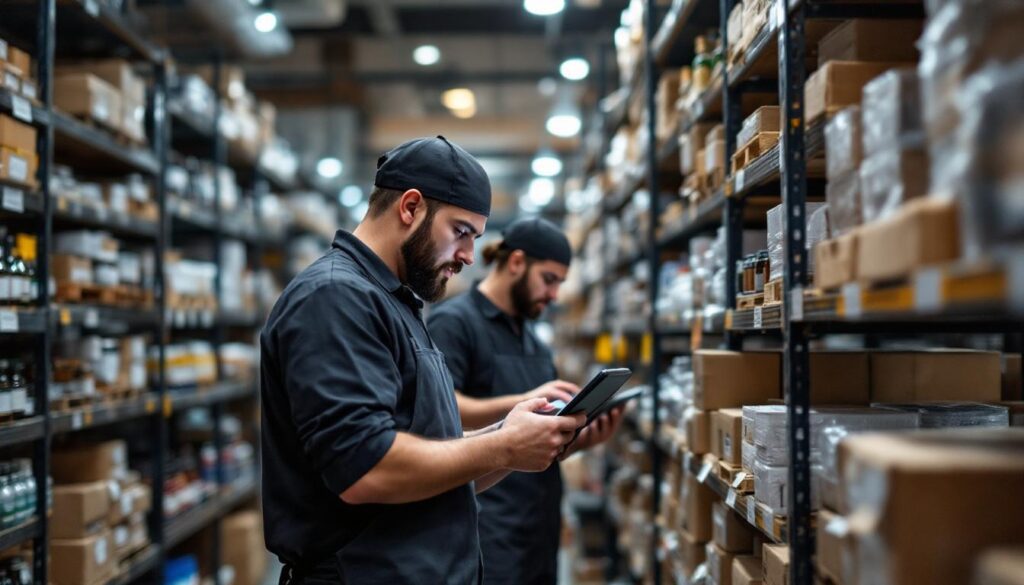
Automated par-level alerts and suggested reorder quantities reduce the administrative load on managers. When inventory and purchasing are linked, ordering becomes demand-driven: the system suggests quantities based on sales velocity, upcoming reservations, and known events, preventing stockouts or excess inventory that ties up cash.
Additionally, incorporating mobile inventory apps enables staff to perform counts and updates directly from the floor or storage areas, increasing efficiency and minimizing data entry errors. Training employees on proper handling and consistent scanning procedures enhances data reliability, ensuring the inventory system reflects real stock levels at all times.
Use data to manage menu engineering
Menu engineering is the practice of analyzing item profitability and popularity to make strategic menu changes. Tag menu items by contribution margin and sales volume within the POS, and run periodic matrix reports that classify dishes into stars (high profit, high popularity), puzzles (high profit, low popularity), plowhorses (low profit, high popularity), and dogs (low profit, low popularity).
Adjust pricing, portioning, or promotion strategy based on those insights. Promote higher-margin “star” items via server prompts, strategic placement on the menu, or limited-time discounts that create urgency without undermining long-term margins. For “puzzle” items, consider lowering price slightly or repositioning to drive trials, or rework the recipe to reduce cost if demand remains low.
Incorporating seasonality and supplier pricing trends into menu analyses further refines decision-making. For instance, substituting costly ingredients for equally appealing alternatives during certain periods can improve profitability without sacrificing item quality. Regularly gathering customer feedback alongside sales data also helps identify opportunities to refresh or retire underperforming dishes that don’t resonate with guests.
Control beverage program costs
Beverage programs are a significant margin driver for bars and restaurants. Utilize portion-control tools—measured pourers, speed rails, or electronic pour systems—to standardize pours and eliminate overpouring losses. Track pour data against sales to detect shrinkage or theft and to identify training needs.
For draft programs, maintain detailed keg tracking (purchase date, server, yield estimates) and rotate stock to minimize waste. For wine and bottling, implement FIFO (first in, first out) storage and monitor corked or oxidized bottles. Proper glassware selection and consistent pour recipes also support predictable cost structures and guest experience.
Furthermore, analyzing sales patterns by time of day or event type allows for optimized beverage promotions that balance volume and margin. Training bartenders on upselling and suggestive selling techniques paired with inventory insights can increase average check sizes while controlling costs. Periodic audits of vendor invoices and comparing contracted prices against market trends ensure the beverage program remains cost-effective and competitive.
How to efficiently manage staff in bars and restaurants
Hire for attitude, train for skill
Recruitment should focus on candidates who demonstrate service orientation, adaptability, and teamwork because skills can be taught more easily than temperament. Create a structured onboarding program that pairs new hires with experienced mentors, includes role-specific checklists, and sets measurable milestones for competency in POS use, safety, and brand standards.
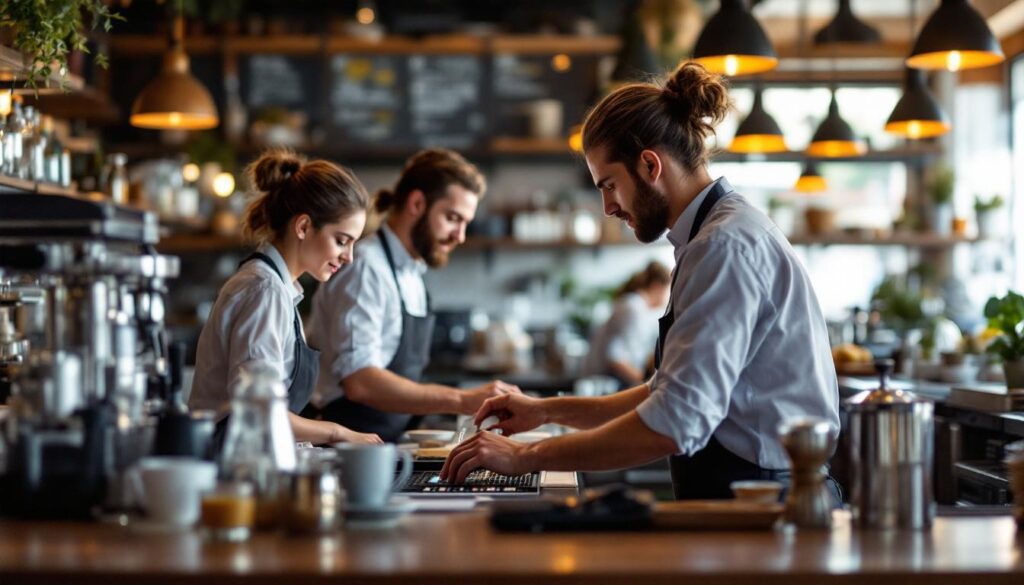
Ongoing cross-training increases flexibility, allowing staff to switch between roles (server to barback, line cook to prep) during busy periods. Cross-trained teams reduce the need for overtime and help maintain service levels when unexpected absenteeism occurs.
Use scheduling tools and flexible staffing models
Labor is one of the largest controllable costs in hospitality. Scheduling tools that integrate historical sales data, events, weather forecasts, and reservation lists can forecast demand and suggest optimized schedules. This reduces overstaffing during slow windows and understaffing during peaks, improving both customer experience and labor efficiency.
Consider flexible staffing arrangements such as split shifts, on-call lists for known busy nights, and part-time talent pools for weekends. Clear advance notice and fair scheduling practices improve retention; unpredictable schedules are a major driver of turnover in the industry.
Measure performance with clear KPIs and regular feedback
Establish a small set of measurable KPIs—table turn time, average check, labor cost percentage, ticket times, and guest satisfaction scores—and review them weekly with shift leads. Visibility into performance creates accountability and helps the team focus on operational improvements that impact both service and profitability.
Combine quantitative metrics with qualitative feedback through short, frequent coaching sessions. Celebrate wins (e.g., improved cover counts or a successful high-volume service) and address issues promptly with specific action plans rather than vague criticism. Investing in employee development reduces turnover and elevates service consistency.
Leverage conversational and location-based tools for guest engagement
Emerging platforms that combine conversational interfaces with location intelligence are proving useful for guest engagement and acquisition. Tools that allow guests to discover nearby venues, receive personalized suggestions, and interact via chat-driven reservations or offers can increase visibility and streamline guest communications. Experimental platforms that integrate conversation and location data are demonstrating early gains in conversion and repeat visits (conversational location-based platforms).
Use automated messaging for reservation confirmations, waitlist updates, and post-visit feedback to keep customers informed and to collect insights that support continuous improvement. Carefully managed automation frees staff to focus on in-person hospitality while maintaining a high level of communication with guests.
Retain staff through culture and fair compensation
Retention requires a balance of financial and nonfinancial incentives. Competitive wages and transparent tipping or service-charge practices are the baseline. Career pathways, recognition programs, predictable scheduling, and investment in training increase employee loyalty and reduce recruitment costs.
Create a culture that values input from every role; regular staff meetings and suggestion mechanisms that result in visible changes demonstrate that leadership listens. When team members see operational changes backed by management, engagement rises and service quality follows.
Financial monitoring and continuous improvement
Operational efficiency is ultimately measured on the bottom line. Regularly review financial performance indicators—sales trends, labor as a percentage of sales, COGS, and inventory turns. Public companies like Brinker International provide industry benchmarks that can provide context for performance expectations; keeping an eye on broader market trends helps owners set realistic targets.
Establish a cadence for review: daily sales and labor snapshots, weekly inventory and margin checks, and monthly full P&L reviews. Use these reviews to create small, testable experiments—menu tweaks, service scripts, or scheduling changes—and track the impact. Continuous improvement is a discipline of small adjustments rather than one-time fixes.
Practical checklist for immediate action
Several quick interventions can produce immediate gains: implement measured pours and standard recipes, consolidate ordering channels into a single POS or aggregator, set par levels and automate reorder suggestions, and begin tracking a shortlist of KPIs. Pair these with regular staff briefings that emphasize the operational rationale—when the team understands why changes matter, execution improves.
For managers preparing to modernize systems, prioritize integrations: POS to inventory, POS to scheduling, and POS to online ordering. That integration backbone reduces manual reconciliation and provides the consolidated data needed to make more informed decisions.
Investing in the right POS, streamlining kitchen and service workflows, controlling inventory with real-time data, and managing staff through clear expectations and development will reduce waste, improve guest experience, and protect margins. Operators who treat efficiency as a continuous program rather than a one-off project will see the greatest long-term benefits.
Unlock Your Bar and Restaurant’s Full Potential with Data-Driven Insights
Maximize efficiency and profitability by leveraging advanced data analytics and AI tailored for hospitality. At Rockstar Data, we specialize in empowering bars and restaurants to make smarter decisions, optimize operations, and enhance guest experiences. Explore Our Solutions and start transforming your business today.
If you want to review these areas with your own venue data, request a demo to see how Rockstar Data works for your bar or restaurant.