How data intelligence is revolutionizing the nightlife sector
Descubre cómo la inteligencia de datos está revolucionando el sector nocturno, mejorando la eficiencia y experiencia.
Data intelligence and artificial intelligence are transforming the nightlife sector, with impacts ranging from extreme customer experience personalization to operational optimization and the redefinition of business models. Bars, pubs, nightclubs, and hotels are adopting real-time analytics, dynamic pricing, and automation to improve profitability and loyalty. This article explores the benefits of real-time analytics, concrete strategies for improving a bar’s profitability through big data, and the most useful tools for implementing an effective data system.
Advantages of real-time data analysis.
Desafíos tradicionales de la industria del ocio nocturno.
Real-time data analysis enables immediate decisions based on actual customer behavior and operating conditions. For the nightlife sector, this means adjusting beverage offerings, modifying promotions on the fly, or reinforcing staff during peak times. This is a key difference compared to traditional analytics, which act late and offer less responsiveness.

A tangible benefit is the improved customer experience: systems that detect preferences and patterns allow for the creation of personalized offers, from suggested cocktails to targeted promotions that increase the likelihood of repeat visits. These adjustments, applied in real time, increase the average checkout without the need to change the physical menu or invest in prior advertising campaigns.
Furthermore, real-time analytics helps reduce waste and operating costs. Inventory management is optimized by understanding consumption rates by hour and product; this prevents overstocking of slow-moving beverages and overpurchases of seasonal products. Business intelligence tools process massive volumes of data and return actionable indicators, such as those offered by specialized platforms for the hospitality industry.
La emergencia de soluciones basadas en datos.
Real-time data also improves venue security and management. Traffic monitoring, peak occupancy detection, and incident analysis allow for real-time reconfiguration of flows and protocols, reducing risks and improving customer perceptions of safety. The combination of operational and behavioral data favors proactive rather than reactive management.
Another important dimension is integration with point-of-sale, reservation, and marketing systems: synchronizing data between these platforms provides a unified view that facilitates targeted campaigns, staff scheduling optimization, and a coordinated response to unforeseen events. This interconnection allows, for example, automatic discounts to be activated when low traffic is detected or customers to be redirected to less crowded areas of the establishment to balance occupancy.
Finally, the responsible use of real-time data requires robust privacy protocols and staff training. Implementing clear policies on the handling of sensitive information and training your team in the use of operational insights ensures that data-driven decisions comply with regulations and foster customer trust, without sacrificing the efficiency and personalization opportunities this technology offers.
Aplicaciones prácticas de la inteligencia de datos en locales nocturnos
Impact on decision-making and security
To implement these practices in bars of any size, it’s best to start by defining simple key performance indicators (KPIs): average ticket, customer return rate, table turnover, and product margin. With accessible dashboards that integrate POS, reservations, and social media, managers can monitor these metrics daily and make agile decisions. There are tremendous solutions on the market—SaaS platforms that connect with the POS and basic BI tools—that allow small establishments to leverage predictive models without large upfront investments.
Equally important is addressing data privacy and governance issues: anonymizing data, obtaining consent for loyalty programs, and complying with local data protection regulations. Training your team on report interpretation and derived tactics (e.g., when to launch a promotion or reinforce personal actions during a specific timeframe) ensures that investment in analytics translates into effective operational changes. Furthermore, short, measurable pilots—A/B tests on promotions or pricing—make it easier to validate hypotheses before scaling them across the entire business.
In addition to technology selection, staff training is a determining factor for the success of any analytics project in bars. Training managers and employees in the use of dashboards, KPI interpretation, and good data quality practices accelerates adoption and prevents erroneous decisions. Ongoing training programs, hands-on sessions with real data, and the appointment of an internal data steward help maintain discipline in data entry and labeling, which directly impacts the reliability of the analyses.
Finally, it’s important to plan for system maintenance and governance: backup policies, disaster recovery plans, predictive model review processes, and update schedules reduce the likelihood of interruptions and biases in results. Evaluating the total cost of ownership (licensing, integration, maintenance, and training) against the expected return—improvements in stock turnover, increased average ticket volume, or reduced waste—allows you to prioritize investments and justify projects to management.
Furthermore, it’s important to consider data quality and privacy from the outset: defining who accesses what information, establishing cleansing and normalization cadences, and complying with data protection regulations. For establishments with tight budgets, there are scalable alternatives, such as starting with low-cost cloud tools, using simple integrations between POS and automated spreadsheets, or collaborating with consulting firms and startups that offer results-based pilots. These approaches allow for rapid learning without large initial investments.
As additional practical guidelines, it’s a good idea to set short-, medium-, and long-term KPIs (e.g., media sales per shift, key product turnover, and customer retention), establish an A/B testing plan for promotions and menus, and document hypotheses and results for iteration. A well-defined pilot—for example, in a single location for 6–8 weeks—usually provides enough information to decide whether to scale the solution and helps build internal success stories that facilitate adoption across the rest of the chain.

Although the benefits are numerous, adopting data intelligence comes with challenges. Data quality is key: incomplete or erroneous information leads to poor decisions. Therefore, it’s important to ensure data cleanliness, consistency, and governance from the outset.
Future and trends
There are also ethical considerations related to hyperpersonalization. Using data to personalize offers must respect privacy and avoid practices that could be perceived as intrusive. Transparency about data use and offering clear consent options strengthen customer trust.
Challenges and ethical considerations
Tendencias emergentes y tecnologías predictivas
Las tendencias apuntan a una mayor integración entre datos operativos, experiencias inmersivas y modelos predictivos. En destinos turísticos, por ejemplo, se están probando rutas personalizadas y experiencias virtuales que anticipan deseos del cliente incluso antes de su llegada, creando un ciclo de servicio más fluido y relevante ( elpais.com ).
Data-related positions in the hospitality industry are also expected to become more professional, reflected in the growing demand for AI and data analytics specialists. This will allow nightlife businesses to scale their operations and make more informed decisions on an ongoing basis.
Furthermore, emerging regulations and standards on data protection and explainable algorithms will determine the pace of adoption. Companies will need to invest not only in technology but also in compliance and auditing frameworks to ensure models do not reproduce discriminatory biases and that decision-making processes are traceable and justifiable.
Finally, collaboration between technical and operational teams will be critical: success depends on training staff in data literacy, fostering controlled testing environments, and choosing interoperable and easy-to-use tools. In this way, data intelligence will not only be a competitive advantage, but also a lever for improving customer experience and long-term operational sustainability.
To implement these practices effectively, it’s a good idea to start by defining specific key performance indicators (KPIs): customer retention rate, average ticket per visit, table turnover time, and cost per acquisition, among others. Establishing a dashboard with real-time data facilitates operational decisions—for example, adjusting staffing based on customer flow or promoting higher-margin drinks during specific time slots—and allows you to accurately measure the impact of each change.
Furthermore, team building and technology partnerships should not be underestimated. Training staff on management and analytics systems and collaborating with solution providers (CRM, POS, loyalty platforms) accelerates adoption and reduces friction. An iterative approach—testing hypotheses, analyzing results, and scaling what works—turns data intelligence into a continuous cycle of improvement that drives both customer experience and store profitability.
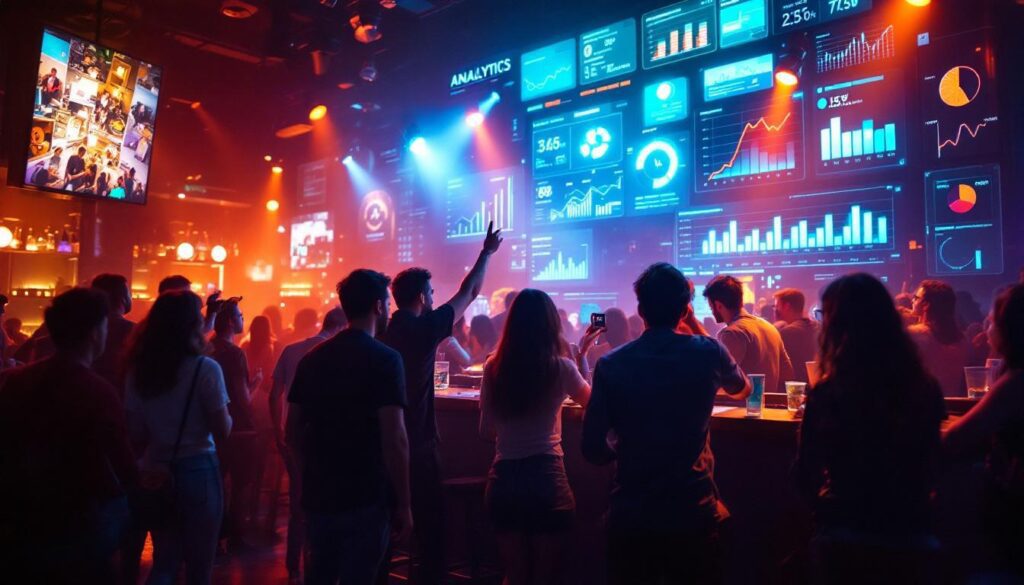
Entre las tendencias emergentes se encuentran el uso de inteligencia artificial para la gestión automatizada, la incorporación de sensores IoT para monitorear el ambiente y la aplicación de análisis en tiempo real para ajustar operaciones al instante. Estas tecnologías, combinadas con big data, ofrecen un panorama prometedor para la optimización continua. Por ejemplo, la inteligencia artificial puede analizar patrones de consumo y sugerir cambios en el menú o en la programación de eventos, lo que podría resultar en un aumento significativo de la satisfacción del cliente y, en consecuencia, de los ingresos.
Además, sectores relacionados como el inmobiliario ya emplean datos en tiempo real y análisis de investigación para identificar tendencias de mercado, lo que puede inspirar nuevas estrategias para la ubicación y diseño de locales nocturnos ( Cushman & Wakefield ). La elección de una ubicación estratégica, basada en datos demográficos y de comportamiento, puede marcar la diferencia entre el éxito y el fracaso de un nuevo establecimiento. Además, la personalización de la experiencia del cliente, impulsada por el análisis de datos, puede llevar a una fidelización sin precedentes, donde los clientes se sientan realmente valorados y comprendidos.
Consideraciones éticas y de privacidad en la recopilación de datos
At Rockstar Data, we’re dedicated to transforming your nightlife business through analytics and AI: unlocking insights, automating decisions, and improving profitability and customer experience. If you want to turn the KPIs and pilots described into real results, Explore our solutions and discover how we can help you make the most of your data.
Transforma Tu Sector Nocturno con Rockstar Data
En Rockstar Data, estamos comprometidos con la transformación de tu negocio a través del poder del análisis de datos y la inteligencia artificial. Nuestras soluciones de vanguardia están diseñadas para desbloquear conocimientos, impulsar la innovación y llevar tu negocio hacia adelante en la era digital. Permítenos ayudarte a aprovechar todo el potencial de tus datos y mantenerte a la vanguardia de la competencia. Explora Nuestras Soluciones y comienza a revolucionar tu establecimiento nocturno hoy mismo.