Christmas marketing strategies for restaurants
Discover the best Christmas marketing strategies for restaurants and how to increase bookings during the holiday season.
Reservations skyrocket, families look for places to celebrate, and companies need a welcoming venue for their corporate dinners. The holiday season can transform an ordinary month into the most profitable of the year, provided the restaurant has a clear plan. It’s not just about filling tables: Christmas evokes memories, emotions, and traditions, and businesses that know how to leverage this emotional component, as highlighted by the emotional marketing approach to Christmas, manage to create memorable experiences that translate into sales and loyalty.
For a restaurant, the difference between simply “getting through Christmas” and “making the most of Christmas” lies in the strategy. Decorations, special menus, digital campaigns, events, and well-designed promotions transform these weeks into an opportunity to stand out from the competition. An integrated approach allows you to engage the customer at every touchpoint: when they’re searching for a place to eat, when they see an ad on social media, and when they walk through the door and are greeted by a warm and festive atmosphere.
Planning ahead, aligning the holiday offering with the restaurant’s identity, and measuring what works in each campaign are key to repeating success year after year. The following strategies offer a practical and actionable framework for any restaurant, from a neighborhood bistro to a fine-dining establishment, to design a profitable, brand-consistent, and appealing holiday season for its customers.
Preparing the restaurant for the holiday season
Before even thinking about campaigns or giveaways, the work begins internally. Defining special hours, reservation policies, maximum capacity, and product stock levels prevents overbooking, excessive wait times, and negative experiences on peak days. A good starting point is to create a holiday calendar that includes key dates (potential company dinners, Christmas Eve, Christmas Day, New Year’s Eve, family gatherings) and estimate what types of services (lunches, dinners, cocktails) you want to promote on each date.
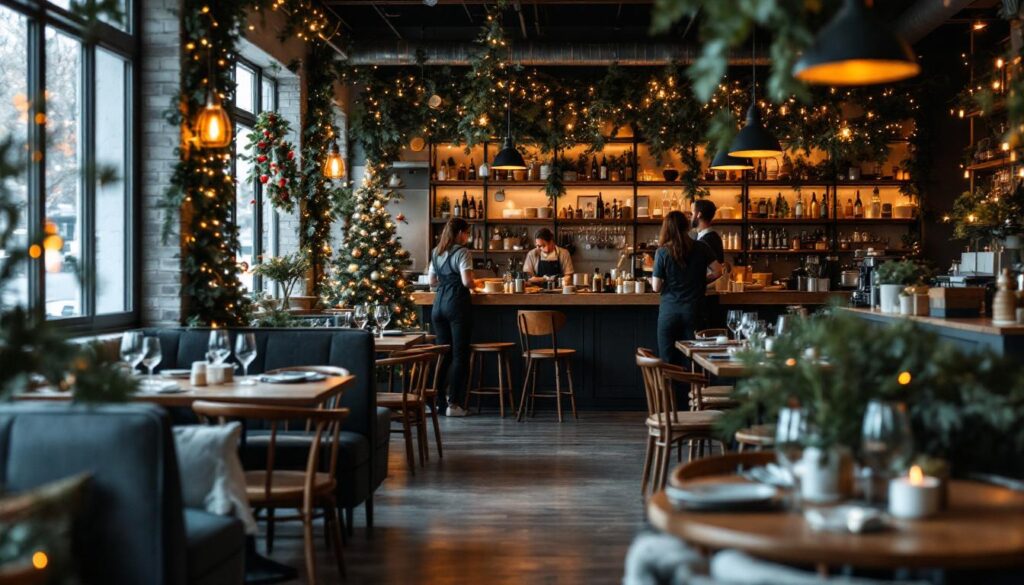
Preparation also involves adapting the space, service, and food offerings to the season. The festive atmosphere influences the perceived value and the decision to enter a business, something confirmed by holiday
Themed decoration and festive ambiance
Christmas decorations don’t have to turn a restaurant into an over-the-top display. The important thing is to convey a sense of warmth and celebration that’s consistent with the restaurant’s style. An elegant restaurant might opt for a subdued color palette, warm lighting, and understated centerpieces; a more casual one can play with vibrant colors, playful messages, and eye-catching elements that invite customers to take photos.
The restaurant’s exterior acts as a permanent advertisement on the street. Garlands on the facade, a Christmas tree visible from outside, or a simple decorated corner perfect for photos can increase curiosity and drive traffic to the establishment. These kinds of details make the restaurant a neighborhood landmark during the season and encourage customers to recommend it as “the place to experience Christmas.” Maintaining good exterior lighting and brand visibility is essential for standing out on December nights.
Inside the restaurant, the ambiance goes beyond decorations. The music, the aromas (such as cinnamon, citrus, or freshly baked cookies), and the presentation of the dishes complete the sensory experience. Training the team to maintain a particularly friendly attitude, offer holiday greetings, and suggest special options helps reinforce this festive atmosphere. Decor designed to be shared on social media also multiplies the reach at no extra cost: Instagrammable corners and photogenic details encourage diners to tag the restaurant in their posts.
Design of special menus for the holidays
In the food service industry, a digital worker refers to a set of technological tools and systems that automate and optimize key tasks within a bar or restaurant. This includes online reservation systems, digital menus accessible from mobile devices, and digital signage that communicates offers and events in real time.
These integrated systems streamline daily operations, from greeting customers to updating the menu, allowing staff to focus on providing better service. Furthermore, digitalization enhances customer interaction, enabling them to access information quickly and easily without relying solely on staff.
For example, the use of mobile apps allows diners to place orders and pay directly from their phones, which not only streamlines the process but also reduces the risk of order-taking errors. This technology also allows restaurants to collect valuable data on customer preferences, which in turn can be used to personalize offers and improve the overall customer experience. In a world where personalization has become key, digital workers are becoming essential allies for the success of food service businesses.
Digital marketing campaigns to attract customers
Once the restaurant is internally prepared, the focus shifts to strategically communicating its holiday offerings. Digital marketing allows you to reach both regular customers and new audiences who are unfamiliar with the establishment but are actively searching for places to celebrate. Guides to holiday marketing campaigns on social media and online channels emphasize the importance of planning specific content for this time of year, rather than simply posting generic “Happy Holidays” messages.
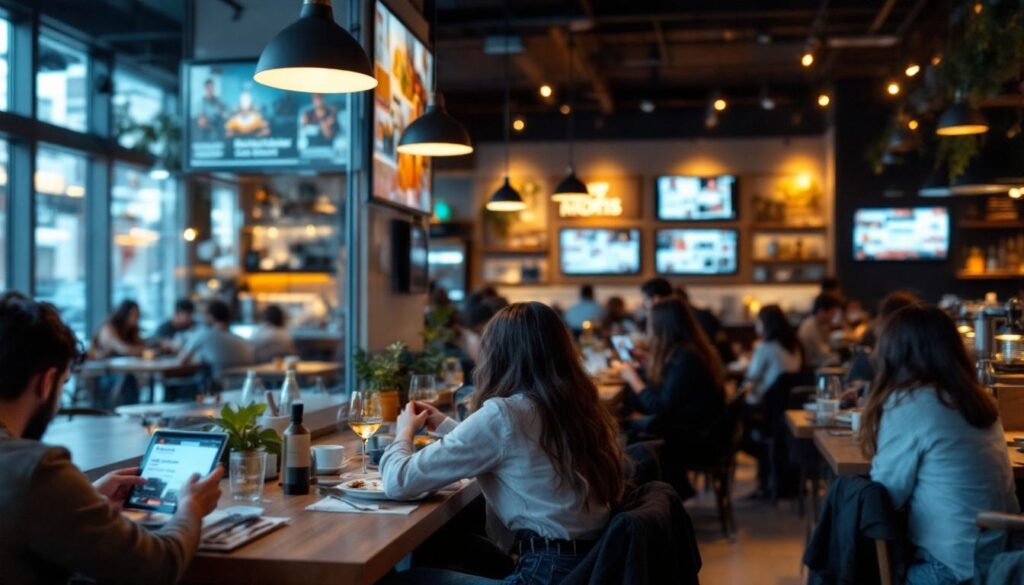
For a restaurant, the two key pillars are social media and email marketing. The former helps generate reach, brand awareness, and engagement; the latter is used to close reservations, communicate special menus, and build customer loyalty. Designing an integrated campaign involves defining specific objectives: Do you want to fill corporate dinners? Sell more gift cards? Position your Christmas Eve menu? Each objective requires specific messages, formats, and calls to action.
Social media strategies to promote Christmas offers
Social media is the perfect visual showcase for displaying your restaurant’s Christmas decorations, special dishes, and ambiance. A good starting point is to create a consistent Christmas aesthetic: use the same colors, fonts, and photography style for several weeks so your feed conveys coherence and is quickly associated with the season. Stories, Reels, and short videos showing table settings, the plating of a festive dessert, or a team toasting add a personal touch.
Contests and giveaways are especially effective at this time of year, as highlighted in recommendations for Christmas marketing campaigns with interactive elements. You can offer dinners for two, tastings of the special menu, or gift cards in exchange for users commenting, tagging friends, or sharing a post. This approach amplifies organic reach and, at the same time, builds a base of potential customers interested in the restaurant’s offerings.
User-generated content is also highly valuable. Inviting diners to upload photos of their celebration at the restaurant, using a specific hashtag, allows you to showcase real experiences without the need for complex photo shoots. Responding to comments, sharing customer stories, and publicly thanking guests for mentions not only improves visibility but also reinforces the image of a friendly and attentive business. Combining this organic approach with a small investment in ads targeted by geographic area and customer affinities greatly increases the chances of filling tables on key days.
Email marketing and customer loyalty during the holidays
Email remains one of the most effective channels for restaurants, especially during the Christmas season. Consumers are more receptive to receiving menu suggestions, promotions, and gift ideas during this time, which is reflected in an increased email open rate that can grow by around 20% during the holiday season, according to analyses of December email marketing strategies. Capitalizing on this requires planning a well-thought-out email sequence.
An effective strategy typically begins with a seasonal announcement email: showcasing the décor, sharing photos of the special menu, and explaining group options. Afterward, segmented messages can be sent: one focused on corporate dinners for business contacts, another geared toward families, and yet another specifically promoting gift cards. Segmentation allows you to tailor the tone and offer to the actual needs of each customer type, improving response rates.
Email is also a powerful tool for building customer loyalty beyond December. Sending a thank-you message after a visit, including a small incentive to return in January or February, or inviting guests to leave a review fosters a lasting relationship. Crafting compelling subject lines, using attractive images of holiday dishes, and highlighting clear calls to action (book a table, reply to the email, purchase a gift card) transforms the inbox into a direct sales channel for the restaurant.
Special seasonal events and promotions
During Christmas, many customers are looking not just for good food, but for a complete celebratory experience. Themed events, corporate dinners, and limited-time promotions become especially appealing. Revenue optimization studies in the restaurant industry, such as those on strategies to maximize revenue on Christmas Day, highlight the impact of offering special packages and gift cards with bonuses to attract both those celebrating and those looking for last-minute gifts.
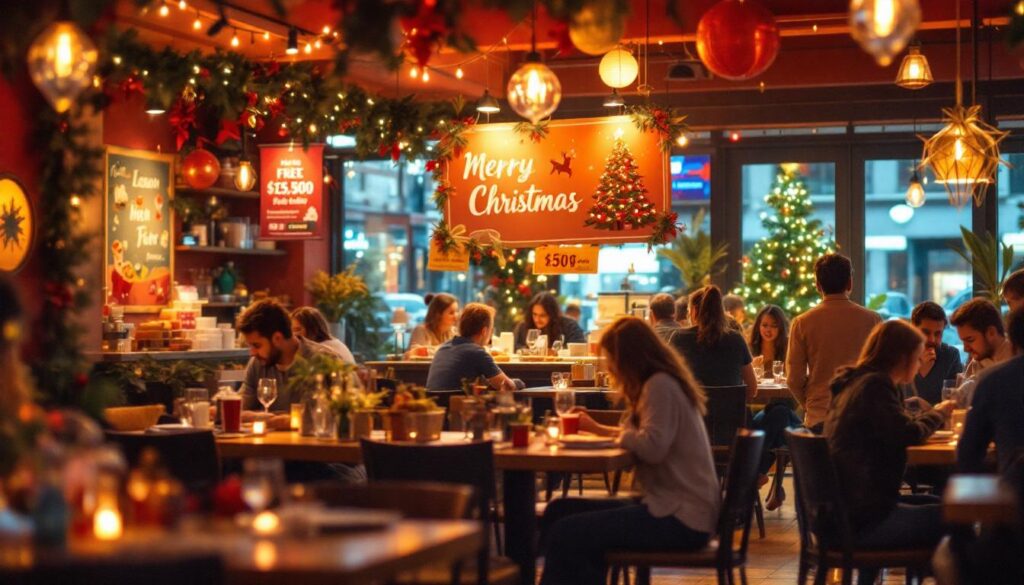
Designing a calendar of Christmas events helps to showcase your restaurant’s offerings and differentiate it in a saturated market. Wine and food pairings, live music nights with a special menu, Christmas brunches, or themed afternoon teas for children are just some ideas that can be adapted to suit your target audience. The most important thing is that each event has a clear business objective and a message that is easy to communicate across all channels: what’s on offer, who it’s for, and how to book.
Organization of Christmas dinners and corporate events
Corporate dinners continue to be a major driver of bookings in December. To attract this segment, it’s helpful to design specific packages for corporate groups, with set menus, open bar options, defined timings, and, if possible, added value such as a welcome cocktail or a small gift for each attendee. Having these proposals ready from the start of the season makes sales easier when inquiries begin to come in.
Logistical organization is key. Defining areas of the restaurant that can be reserved exclusively for groups, planning for extra staff in the dining room and kitchen on busy days, and agreeing on clear payment and cancellation policies reduces the likelihood of last-minute problems. For businesses, speed of response and budget clarity are often as important as the price itself. Sending a digital brochure with menus and terms and conditions speeds up decisions.
It’s also important to pay attention to the overall experience during the event. A dedicated host or manager, coordinated service times, and good sound management (to allow for speeches, presentations, or music) make all the difference. These corporate dinners, if well-managed, become a powerful word-of-mouth marketing tool: many attendees will return later with their families or friends, remembering the restaurant as a place where important moments are celebrated.
Gift cards and promotional packages for the holidays
Gift cards have become one of the most effective tools for increasing revenue during the Christmas season. Offering dining experiences as gifts allows businesses to capture advance sales and ensure future visits. Industry reports, such as those on optimizing Christmas revenue with gift cards, highlight that limited-time promotions (for example, adding extra value to the card during December) can significantly boost their appeal compared to other types of gifts.
For gift cards to be effective, they must be easy to purchase and use. Offering both a physical version, with a thoughtful design suitable for gifting, and a digital version, delivered by email or text message, expands sales opportunities. Clearly explaining the terms of use is essential: validity period, whether they apply to the entire menu or only certain services, and whether or not a reservation is required. The simpler the process, the more likely the customer is to choose to gift a restaurant experience.
In addition to gift cards, holiday promotional packages can include attractive combinations: a tasting menu for two with wine pairings, a special New Year’s brunch, themed tastings, or all-inclusive experiences for small celebrations. These packages can be promoted on social media, via email, and in the restaurant itself, with visually appealing materials near the bar or cashier. Communicating limited availability, whether by date or number of seats, helps create a sense of urgency and convert interest into actual bookings.
Maximize Your Restaurant's Potential This Christmas with Rockstar Data
The holiday season is a golden opportunity for your restaurant to shine, but are you making the most of every statistic and trend to outshine the competition? At Rockstar Data, we specialize in transforming your business through advanced data analytics and artificial intelligence. Our innovative solutions are designed to unlock valuable insights, drive innovation, and put you at the forefront of the digital age. Let us help you harness the full potential of your data and stay ahead of the curve. Explore our solutions and ensure this holiday season is the most successful ever.