Cost optimization in restaurants: keys to reducing expenses and increasing profits
Reducing costs without sacrificing service quality or customer experience is one of the main challenges facing the hospitality industry today. Competition, supplier price variability, and growing awareness of sustainability are forcing restaurants to review processes, update tools, and make data-driven decisions. This article offers practical, proven strategies for optimizing daily operations, managing purchases effectively, and adjusting energy and human resources to improve profitability.
Analysis and control of costs in daily operations.
Effective cost control starts with knowing exactly where money is being spent. This involves breaking down fixed and variable costs, establishing key performance indicators (KPIs)—such as raw material cost per dish, gross margin per service, and average ticket—and reviewing this data on a weekly or monthly basis. Discipline in recording and analyzing data allows you to detect deviations and opportunities for improvement before they affect the bottom line.
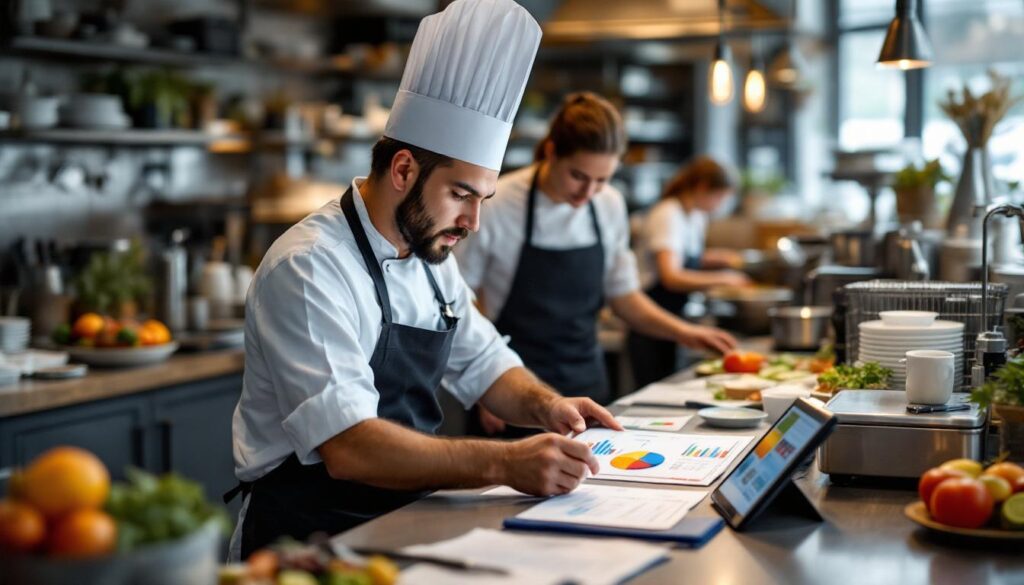
In addition to quantitative analysis, it is advisable to evaluate operational processes: preparation times, ingredient traceability, and service routes. Small inefficiencies, repeated throughout the week, generate significant costs. Automating data capture, for example by integrating sales with inventory and financial reports, facilitates decision-making and saves management time.
Implementation of efficient inventory systems.
A well-managed inventory reduces waste, avoids unnecessary purchases, and improves menu planning. The FIFO (First In, First Out) method is essential to ensure that older products are consumed first, avoiding losses due to expiration. Beyond the method itself, the adoption of digital solutions for rotation, batch control, and minimum stock alerts allows for quick reactions to changes in demand.
The digitization of inventory must integrate data with purchasing and production; this way you a11> achieve a real view of the cost per dish and it can be a19> can adjust portions or suppliers according to profitability. For restaurants with high turnover of fresh products, linking inventory a33> with local suppliers facilitates purchasing in the short term and reduces immobilized stock.
Monitoring and reduction of food waste
Reducing food waste has a direct impact on the cost of sales and the sustainability of the restaurant. Keeping daily records of leftovers, shrinkage, and causes (overproduction, improper preparation, ordering errors) allows you to quantify waste and define specific measures. Small changes in preparation or portion size can translate into significant savings when applied systematically.
Encouraging a culture of responsibility with regard to waste, training staff in techniques for making the most of ingredients (such as using trimmings in broths or reusable garnishes) and designing recipes that allow for flexibility are practices that reduce costs without affecting quality. Measurement and control tools, combined with weekly indicators, help maintain discipline and show clear results to the team.
To complement these practices, it is essential to optimize relationships with suppliers through regular negotiations, reviewing conditions, and seeking local alternatives that offer better value for money. Consolidating purchases, agreeing on volume discounts, or establishing delivery windows that minimize supply chain disruptions helps reduce the average cost of acquisition. In addition, comparing prices and specifications (benchmarking) with other establishments in the sector helps to identify savings opportunities without compromising quality.
Likewise, controlling operating costs is not limited to the purchase of raw materials: energy management, efficient staff scheduling according to demand, and menu engineering (designing dishes with high margins and low preparation complexity) are powerful levers. Implement shifts based on traffic data, audit electricity and gas consumption, and periodically review the menu to incorporate seasonal options that allow you to maintain operational profitability and quickly adapt to market fluctuations.
The adoption of technological tools significantly improves purchasing management: real-time inventory management systems, consolidated ordering platforms, and data-driven forecasting software help reduce excess stock and supply shortages. Integrating the point of sale (POS) with the purchasing system facilitates the traceability of sales per dish and the automation of orders according to predefined thresholds, freeing up staff time and minimizing human error.
Defining key performance indicators (KPIs) for suppliers—such as delivery compliance, quality received, price variation, and response time—and evaluating them periodically using scorecards helps identify areas for improvement and make objective decisions about continuity or renegotiation. At the same time, incorporating sustainability and origin criteria into supplier selection not only responds to market demands, but can also open up opportunities for differentiation (labeling, sustainable menus) and reduce reputational risks associated with irresponsible practices.
Energy efficiency and optimization of human resources
Controlling energy expenditure and optimizing personnel management are two levers that directly impact operating costs. Investing in energy efficiency and demand-based human resources planning reduces recurring costs and improves the customer experience through more consistent and professional service.
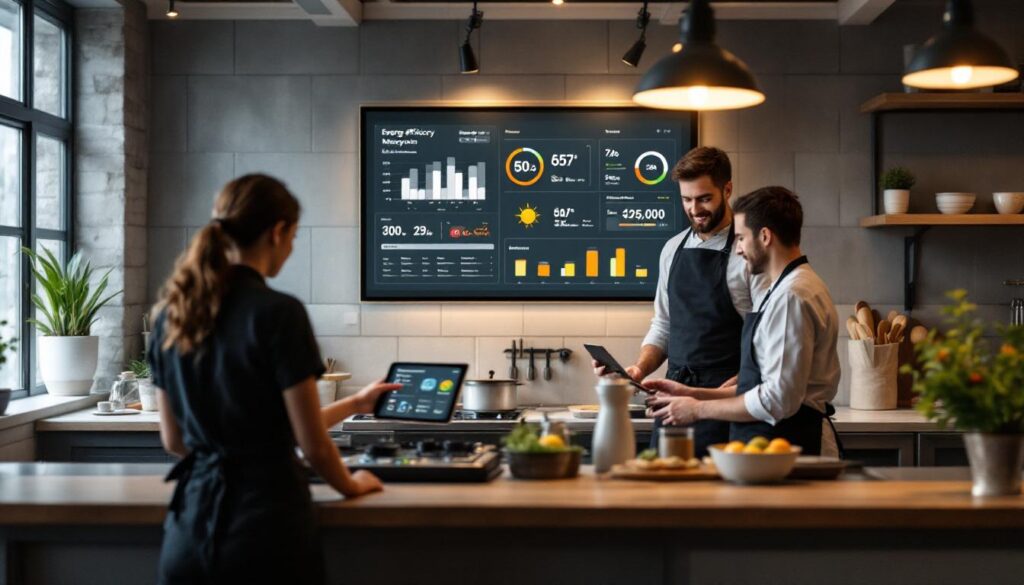
Sustainability, in addition to being an ethical requirement and regulatory compliance in many markets, translates into cost savings in the medium and long term. Efficient equipment, sustainable operating habits, and a clear personnel strategy offer tangible improvements in the cost structure.
Reduced energy consumption and sustainability
Efficient kitchen equipment and LED lighting systems are investments that, although they involve an initial expense, pay for themselves through ongoing savings in consumption. Implementing simple policies—turning off equipment when not in use, maintaining a preventive maintenance plan, and optimizing oven and dishwasher loads—reduces both consumption and the risk of costly breakdowns.
Adopting sustainable practices not only reduces costs, it also improves brand image among customers who are increasingly sensitive to environmental impact. Measuring energy consumption per shift and per area of the restaurant provides data for concrete actions and for evaluating the profitability of investments in efficiency.
For practical ideas and examples of operational savings, you can consult specialized resources such as Mercat and technical guides that explain how to prioritize investments based on expected returns.
Planning of shifts and training of staff.
Shift planning based on actual demand avoids unnecessary overtime and overstaffing during periods of low activity. Tools for analyzing sales by time slots and days allow you to adjust schedules, maintain adequate service levels, and reduce labor costs without sacrificing service quality.
Training and motivating your team is not just an expense: it is an investment in efficiency. Well-trained staff make fewer mistakes, manage service times better, and help reduce waste. Continuous training and performance recognition programs increase productivity and reduce turnover, resulting in savings in recruitment and training costs.
The implementation of clear protocols, operating manuals, and standardized closing/opening routines ensures that best practices are maintained over time. In addition, involving staff in improvement proposals—for example, incentives for waste reduction—generates commitment and practical ideas from those who know the processes in depth.
The incorporation of technological tools—order management systems, energy sensors, and remote equipment control solutions—allows for the automation of repetitive tasks and the optimization of consumption in real time. These platforms facilitate the scheduling of start-ups and shutdowns, the monitoring of critical temperatures, and the early detection of anomalies, which reduces losses and increases the useful life of assets.
Finally, establishing clear metrics and a continuous monitoring system is key to sustaining improvements. Indicators such as kilowatt consumption per diner, labor cost per hour served, or waste rate per plate allow you to compare performance, identify deviations, and prioritize improvement actions. Regular reviews and dashboards accessible to the team encourage shared responsibility and data-driven decision-making.
Conclusion and practical steps to get started.
Optimizing costs in restaurants requires a comprehensive approach that combines data analysis, operational adjustments, and strategic purchasing and energy decisions. The immediate priority should be visibility: knowing costs per dish, measuring waste, and analyzing sales by time slot to decide where to act first. With that foundation, implementing digital inventory systems, negotiating with suppliers, and redesigning the menu will produce sustainable results.
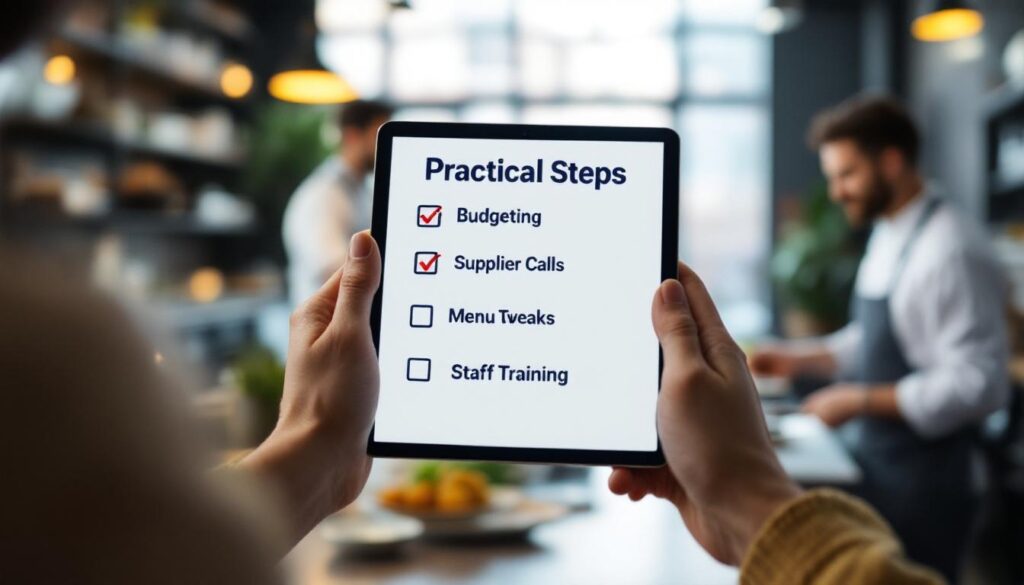
Small measures accumulated —such as standardizing recipes, applying FIFO, negotiating prices and scheduling purchases of seasonal products — can transform the margins without sacrificing quality. In addition, investing in energy efficiency and in training of staff ensures that the savings are long-lasting.
To delve deeper into tactics specific and examples applicable to restaurants of a8> different sizes, are recommended practical sources that expand on these concepts, such as the articles by AuxiHostelería , TipsTPV y TableIn . Applying these keys with discipline and periodic review will enable you to convert operational efficiency into greater profits and a more solid value proposition for customers.
A key operational step is to define and monitor specific KPIs: raw material cost per serving, percentage of food cost over sales, inventory turnover, shrinkage level, and average ticket per hour. These indicators, fed by a management system (ERP or POS with purchasing and inventory module), allow you to detect dishes with hidden costs, inefficient schedules, or suppliers that make the menu more expensive. Digitization also makes it easier to make projections and simulate the impact of price or supplier changes before implementing them.
Equally important is the human dimension: creating a culture of cost responsibility among chefs, managers, and front-of-house staff. Establishing ongoing training (portioning techniques, techniques for utilizing by-products, good storage practices) and small pilot tests before rolling out changes reduces friction and improves adherence. Finally, setting regular reviews—monthly for purchases and waste, quarterly for renegotiations with suppliers—ensures that improvements are sustainable and that the restaurant adapts quickly to market variations.
Turn data into savings and competitive advantages
At Rockstar Data, we help restaurants transform operational visibility and cost control into actionable decisions through advanced analytics and artificial intelligence. Discover how our solutions can measure key KPIs, optimize inventory, predict demand, and reduce waste to improve margins and efficiency. Explore our solutions