
Strategies to increase the average ticket in restaurants without losing customers
The average ticket is a key metric for a restaurant’s profitability: increasing per-guest spend without sacrificing the experience is the most sustainable way to improve revenue. The tactics that follow focus on influencing purchasing decisions in a subtle and respectful way, combining menu design, staff training, technology, and experiences that increase the perception of value. Each proposal is designed to be implemented without pressure on the customer and to integrate with daily operations.
Menu design techniques to increase sales
The menu is a sales tool in itself: its organization, language, and format influence diners’ choices. A well-designed menu guides the eye toward the most profitable dishes and facilitates decisions that naturally increase the average check. Furthermore, the transition to digital and dynamic menus opens up possibilities for displaying images, extended descriptions, and additional suggestions.
Menu engineering and price psychology make it possible to transform the menu into a revenue driver without the need for widespread price increases. These changes typically have immediate effects and, when implemented properly, do not affect customer satisfaction.
On the other hand, training of kitchen and service staff is essential to successfully implement these strategies. A team that is well informed about the importance of waste reduction and portion control techniques can make a big difference. Investing in training and awareness not only fosters a more efficient work environment, but also empowers employees to actively contribute to the sustainability of the restaurant, promoting a culture of responsibility towards the environment.
Menu engineering: strategic positioning of profitable dishes
Menu engineering involves analyzing the popularity and profitability of each dish to strategically place the star items. Behavioral studies show that diners tend to focus more on the top and right-hand sections of a physical or digital page, so placing dishes with higher margins there increases the likelihood of sales.
In addition to positioning, dish descriptions directly influence the perception of quality. Sensory descriptions (text that evokes aroma, texture, and the origin of ingredients) increase willingness to pay. Including pairing recommendations and brief notes on the origin of premium ingredients can justify higher prices and encourage cross-selling.
For establishments with digital menus, rotation and A/B testing become allies: changing the visibility of a dish for a limited time and measuring its performance allows for continuous menu optimization. Implementing controlled tests reduces risk and maximizes learning about real customer preferences.
Price Psychology: Currency Symbol Removal and Price Anchoring
The way prices are displayed influences the perception of spending. Simple elements such as removing the currency symbol or using discreet fonts reduce the focus on cost and can increase purchase willingness. These types of adjustments don’t change the price, but they do change the decision-making experience.
Anchoring is another effective tool: including a high-priced flagship dish (without necessarily being the best-selling dish) creates a mental reference that makes other options seem more reasonable. It also helps to offer “upgraded” versions of standard dishes (for example, adding premium protein or special seasonings) with a modest price increase; many customers choose the premium version when they perceive a clear value.
Menu clarity is also key: avoiding excessively layered prices or hidden discounts reduces the feeling of complexity and facilitates the upsell of additional items, such as side dishes or premium drinks. Together, these techniques increase the average check while maintaining transparency and building customer trust.
Suggested and complementary selling strategies
Upselling and cross-selling are tactics that, when executed well, increase the average ticket without pressure. The difference lies in the approach: upselling encourages you to improve your selection (for example, switching from a standard portion to a version with premium ingredients), while cross-selling suggests additional items that complement the experience (an appetizer, a wine, or a dessert).
Implementing these strategies requires clear protocols and ongoing training, as well as messaging and scripts tailored to the restaurant’s tone. The key is to ensure that the suggestions provide real value to the customer and are presented in a natural way.
Training staff to recommend effectively
Staff are the primary recommendation channel: their attitude, knowledge, and timing determine the success of a suggestion. Training in consultative selling techniques allows the team to suggest improvements in a helpful, non-pressured manner. This includes understanding dish combinations, speaking appropriately about origin and preparation, and using open-ended questions to identify preferences.
Coaching your team in concrete terms—for example, presenting an improvement with a clear benefit (“Would you like to add grated truffle to your risotto? It gives a rich aroma and pairs well with the wine you’ve chosen”)—is more effective than offering open-ended options. Setting realistic goals and measuring results also motivates staff without creating tension in customer service.
It’s recommended that training include simulations and in-house feedback, as well as simple metrics (percentage of upsells per service, added value per diner) to assess the real impact on the average ticket.
Creating combos and packages with higher perceived value
Strategic combos offer a simple way to increase average spending: combining a starter, main course, and dessert at a price slightly lower than the individual sum encourages more items per diner. The key is to design packages that truly add value and have adequate margins.
Another effective approach is to create themed or occasion-specific packages (anniversary menus, enhanced executive menus, sharing menus) that respond to specific customer needs and allow for the natural incorporation of higher-priced dishes. Combos should be clearly communicated on the menu and through staff to maximize their reach.
You can also play with sizes and presentations: offering sharing portions or “premium” versions of family dishes turns the experience into a social experience and justifies spending more per table. Including drinks in the combo (for example, a suggested pairing) directly increases the average ticket.
Improved dining experience that justifies higher prices
Increasing the average check doesn’t have to mean pushing prices; a solid strategy is to improve the experience so that customers are willing to pay more. This ranges from small service details to special events and signature menus that add distinction and memorability.
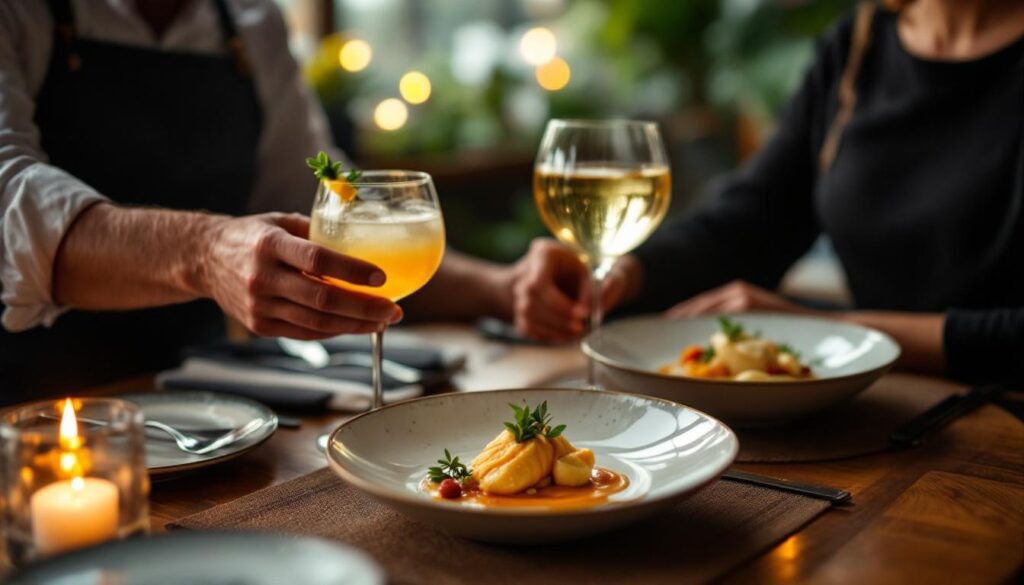
Improving the experience must be consistent with the restaurant’s identity: it’s not about adding unnecessary costs, but rather prioritizing actions that increase the perceived value of the service and the dishes.
Differentiating elements that increase the perception of value
.The perception of value can be enhanced with changes related to presentation, sourcing, and storytelling. More thoughtful presentations, distinctive tableware, and clear references to local suppliers or zero-mile ingredients often justify higher prices and build loyalty among customers interested in authenticity and quality.
Introducing micro-experiences within the meal—a welcome aperitif, small touches between courses, or brief explanations about the origin of an ingredient—transforms the meal into something unique. These enhancements are often cost-effective but have a significant impact on willingness to pay.
Regular events such as theme nights, tasting menus, or tastings allow you to offer a higher-value, more affordable option, distinct from the usual menu. These initiatives, in addition to increasing the average ticket per visit, attract segments of customers willing to pay for exclusive experiences (see examples of strategies with tastings and special menus).
Loyalty programs that encourage higher spending per visit
Well-designed loyalty programs not only increase visit frequency but can also increase spending per visit. Point systems, rewards, and exclusive benefits for reaching certain levels encourage larger purchases to earn valuable rewards faster.
It’s important that rewards are perceived as achievable and relevant: discounts on premium dishes, exclusive experiences (private dinners, tasting menus for two), or booking benefits are often more motivating than generic discounts. Segmenting offers within the program allows you to offer incentives that specifically boost the average ticket.
Technology facilitates the management of these programs and their integration with specific campaigns. A digital system that records consumption and recommends personalized offers increases the program’s effectiveness and allows for measuring the return on average ticket sales.
Technological optimization and payment methods
The adoption of technology in the ordering and payment process streamlines the experience and opens up opportunities to increase per-guest spend. From digital menus to contactless payment options, technology helps reduce friction and present suggestions at the point of decision.
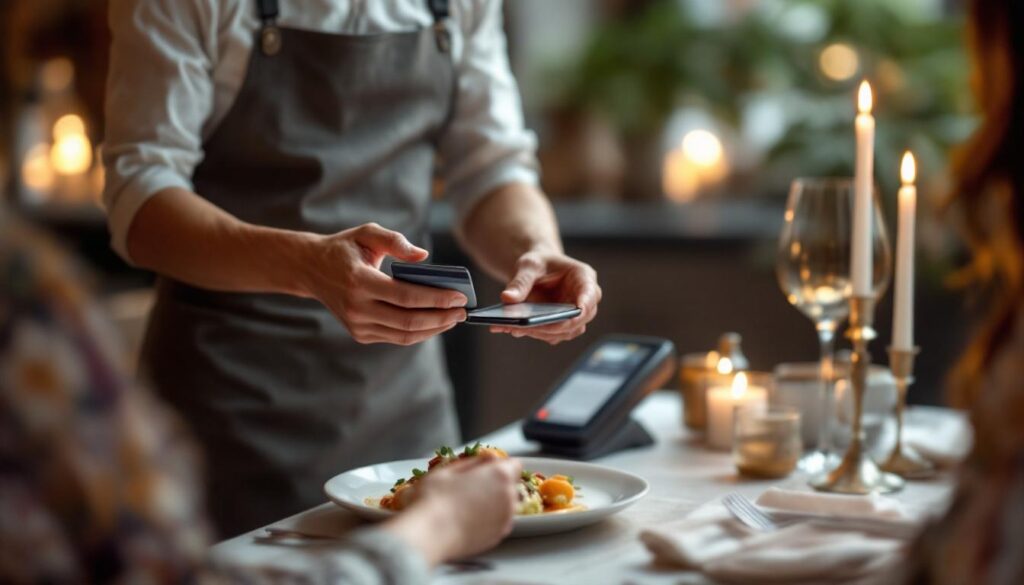
Integrating technology is not an end in itself, but rather a means to improve service flow and facilitate the upselling of add-ons at the right time.
Digital menu and table ordering with QR
Digital menus allow you to present images, expanded descriptions, and combination options right when the customer is making a decision. Using QR codes on tables makes it easier for diners to browse without waiting and adds the ability to suggest dynamic upsells (e.g., “add a side dish for €X”).
An interactive menu also enables personalized recommendations based on consumer history or selected ingredients. Furthermore, the ease of updating prices or promotions in real time makes campaigns more agile and measurable. Implementation resources and guides show that this change improves both efficiency and additional sales (see article on digital menus).
Digital payment options and sales conversion
Offering multiple payment methods—cards, mobile wallets, and contactless options—reduces friction at checkout and makes it easier to accept additional charges, such as extras or additional services. Ease of payment reduces reluctance to add items to an order.
Additionally, integrating payment with the restaurant management system allows for real-time visualization of table behavior and presentation of final suggestions (e.g., dessert or coffee) before the checkout. These technologies also allow for data analysis to identify patterns and design targeted actions to increase the average check (practical guide to payments and technology).
Metrics, testing, and continuous adjustments
The implementation of these strategies must be accompanied by rigorous measurement and a culture of testing and adjustment. Measuring the impact of changes in the menu, training, or technology helps separate effective initiatives from those that fail to deliver results.
Some useful metrics include: average ticket per table, percentage of add-on sales, upsell acceptance rate, performance by menu item, and the lifetime value (LTV) of loyal customers. Comparing time periods and applying A/B testing reduces uncertainty and optimizes investment in specific actions.
For the process to be sustainable, it’s important to establish short measurement cycles (weekly or monthly) and act quickly on the findings, adjusting menu descriptions, sales scripts, or promotions based on what’s learned. The combination of design, staff, and technology ultimately generates consistent increases in the average ticket without impacting the customer experience (see focus on menu engineering and upselling).
Conclusion: Increase average ticket without losing customers
Increasing a restaurant’s average check is a combination of art and science: smart menu design, staff training, improved experiences, and technology create an ecosystem that, when applied consistently, increases spending per diner while maintaining customer satisfaction.
Implementation should be gradual and data-driven: test changes, measure impact, and adjust. Loyalty programs and special events can increase perceived value, while digital menus and payment options make it easier to convert suggestions into actual sales. By applying these strategies in an integrated way, it’s possible to achieve sustainable increases in the average ticket without losing customer loyalty (more practical tactics).
The key is that each action contributes to a real improvement in the customer experience: when diners perceive value, their willingness to pay increases naturally and repeatably.
Boost your average ticket with data and AI
If you want to turn these strategies into measurable results, at Rockstar Data we help you apply advanced analytics and artificial intelligence to identify opportunities, optimize menus, personalize offers, and maximize the average ticket without losing customers. Discover how our solutions can transform your restaurant experience and increase your revenue: Explore Our Solutions
Want to see how this applies to your venue's data? Request a Rockstar Data demo.